
Dubai was the first market outside the UK for Acai Berry Foods, and it is the one I get asked about most, usually by people who assume it was an easy choice. It was an obvious choice, which is not the same thing. The city has a large, affluent, health-conscious population, a café culture that rivals London’s, and a strong appetite for anything new in food. What it does not have is any reason to accept a London concept as it stands, and most of what follows is about the difference between those two facts.
The temptation
When something works in one city the pull is to copy it exactly and put it down in the next. The menu, the design, the pricing, the tone of voice, all of it, because it worked and because changing it feels like admitting it was not perfect. I would argue against that with anyone, and I argued against it here. A concept that worked in London worked because of London: the customers, the competition, the rents, the weather, the regulations. Move it and every one of those changes. What you want to carry across is the reason it worked, not the form it took.
What was actually done
Most of the effort before opening went into research rather than fitting out. What people in Dubai already ate, and when, and where. What the existing cafés and juice bars offered and what was missing. What the rules were for food businesses, which are not the UK’s rules. Which local partners the business would need for supply, for premises and for staff. That work is slow and unglamorous and it is the part most expansions skip.
The menu was adjusted, not rewritten. The açaí itself and the standard it is made to did not change, because that is the product. Around it, portions, combinations, some of the toppings and the balance of the drinks list were adapted to what people there wanted, which was not quite what Londoners wanted. The adjustments were small and they mattered a great deal.
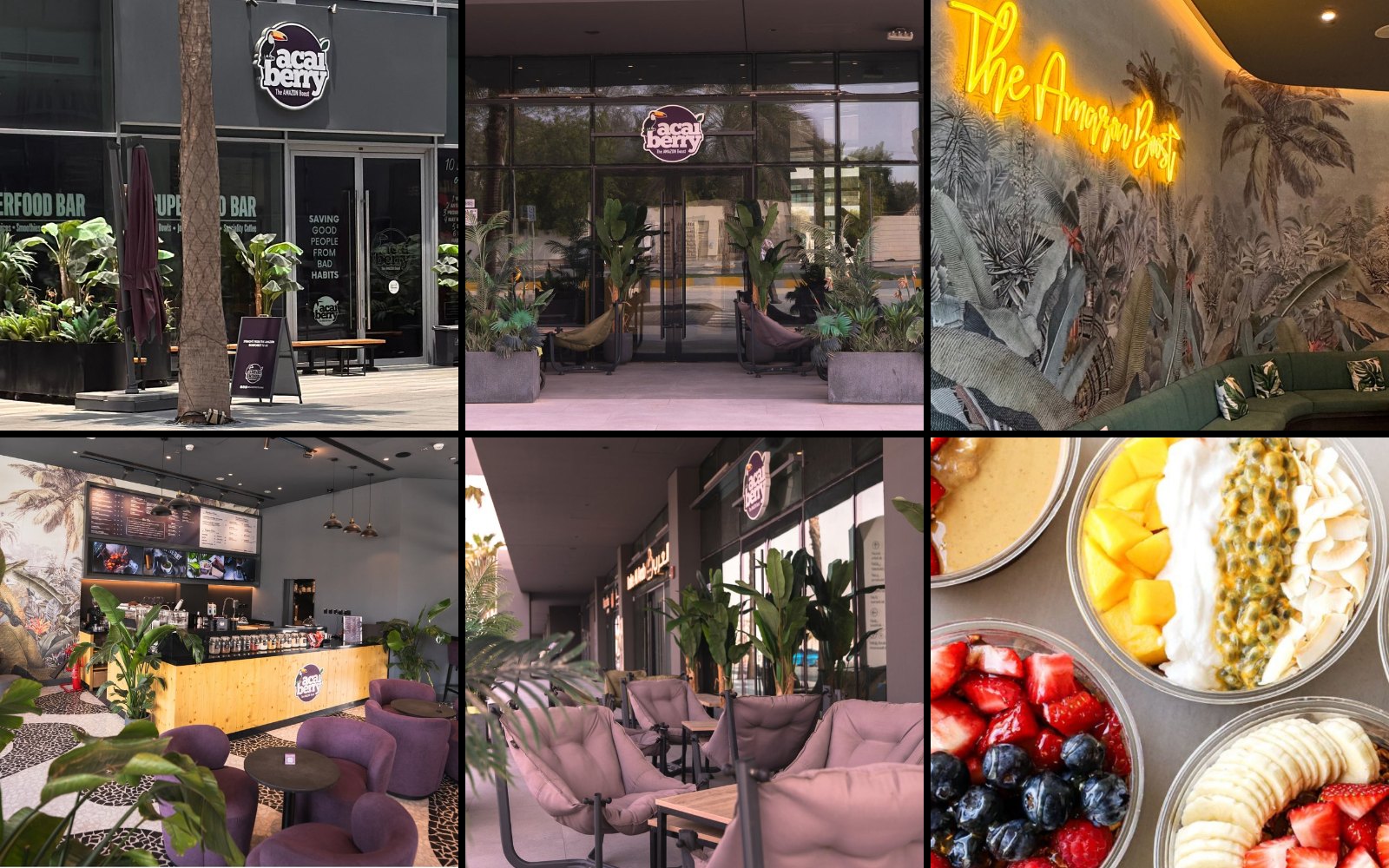
The shop was designed to the same brief as London, somewhere clean and bright that people would sit in and photograph, but executed for a different climate and a different idea of what a premium space looks like. In London the design was understated. In Dubai understated reads as unfinished, and the fit-out reflected that.
The introduction to the market came mostly through people who already had a following in Dubai’s wellness community, together with targeted campaigns aimed at that community rather than at the city at large. In a market where the brand was unknown, credibility borrowed from people who already had it was the fastest way to get a first visit, and after that the product had to do the work. The business has also exhibited at Gulfood, the region’s main food trade show, which is where a great deal of the supplier and distributor side of the market is done.
Core and surface
The way I came to think about it, and the way I would put it to anyone taking a food concept abroad, is that a brand has a core and a surface. The core is the product quality, the ingredient standard, the look and feel of the place, and the way a customer is treated. The surface is the menu combinations, the portion sizes, the prices, the promotions, the seasonal items, the delivery partners and the language on the wall.
Change the surface as much as the new market asks you to, and it will ask for more than you expect. Do not touch the core. If you change the core to suit the market you have opened a different business under the same sign, and the people who knew the original will tell you so. If you refuse to change the surface you have opened a London café in Dubai, and the people in Dubai will tell you that.
What Dubai taught me
That small adaptations earn more than large ones. A few changes to the menu did more for acceptance than a redesign would have, because they signalled that the business had paid attention without changing what it was.
That borrowed credibility is worth having at the start and worthless after it. The people who introduced the brand got customers through the door once. Whether they came back was entirely down to the bowl and the service, and no amount of promotion changes that.
And that consistency is what makes a second site worth having, and a third. There are now four sites in the Emirates, three in Dubai and one in Abu Dhabi, and one in New York, and the same rule has applied to each of them.
The only reason to open in a new city is that the thing you do is good enough to travel. If the standard slips when you are not in the room, you have not expanded, you have diluted, and it is better to have one shop that is right than two that are nearly.