
People sometimes ask why Acai Berry Foods started in London rather than somewhere warmer, where a frozen fruit bowl is a more obvious thing to sell. The short answer is that London is where the business began, in 2016, as a market stall on Brick Lane before it was ever a shop. The longer answer is that London turned out to be a better first market than a beach town would have been, and the reasons why are most of what I learned from the launch.
Why London
Açaí is not a new food. In Brazil it is everyday, sold from kiosks and juice bars as a thick frozen purée with banana and granola on top, and anyone who grew up there has an opinion about how it should be done. London has a large Brazilian population and a larger population from everywhere else, which meant two things at once: a core of customers who already knew the product and would tell us immediately if we got it wrong, and a much bigger group who had never tried it and were curious. You want both. The first keeps a business honest and the second is the business.
London also has a café culture that will try anything once, and underneath the churn of food fashions there is a steady and growing interest in eating well. Açaí sits in the middle of that. It is a fruit, it is unprocessed if you do it properly, and it tastes good, which is the part that a lot of health food forgets. Nobody had to be persuaded that they wanted to eat better. They had to be persuaded that this was a pleasant way to do it.
The decisions that mattered
The site came first and it took longer than anything else. The choice was central London, where the footfall is, and the discipline was to choose on the arithmetic rather than on how a street felt on a sunny afternoon. A location is a rent against a number of transactions per day, and the second number has to be large enough to carry the first with room to spare on a wet Tuesday in February. Several attractive streets failed that test and were passed over, which feels like a loss at the time and in hindsight is usually the first good decision.
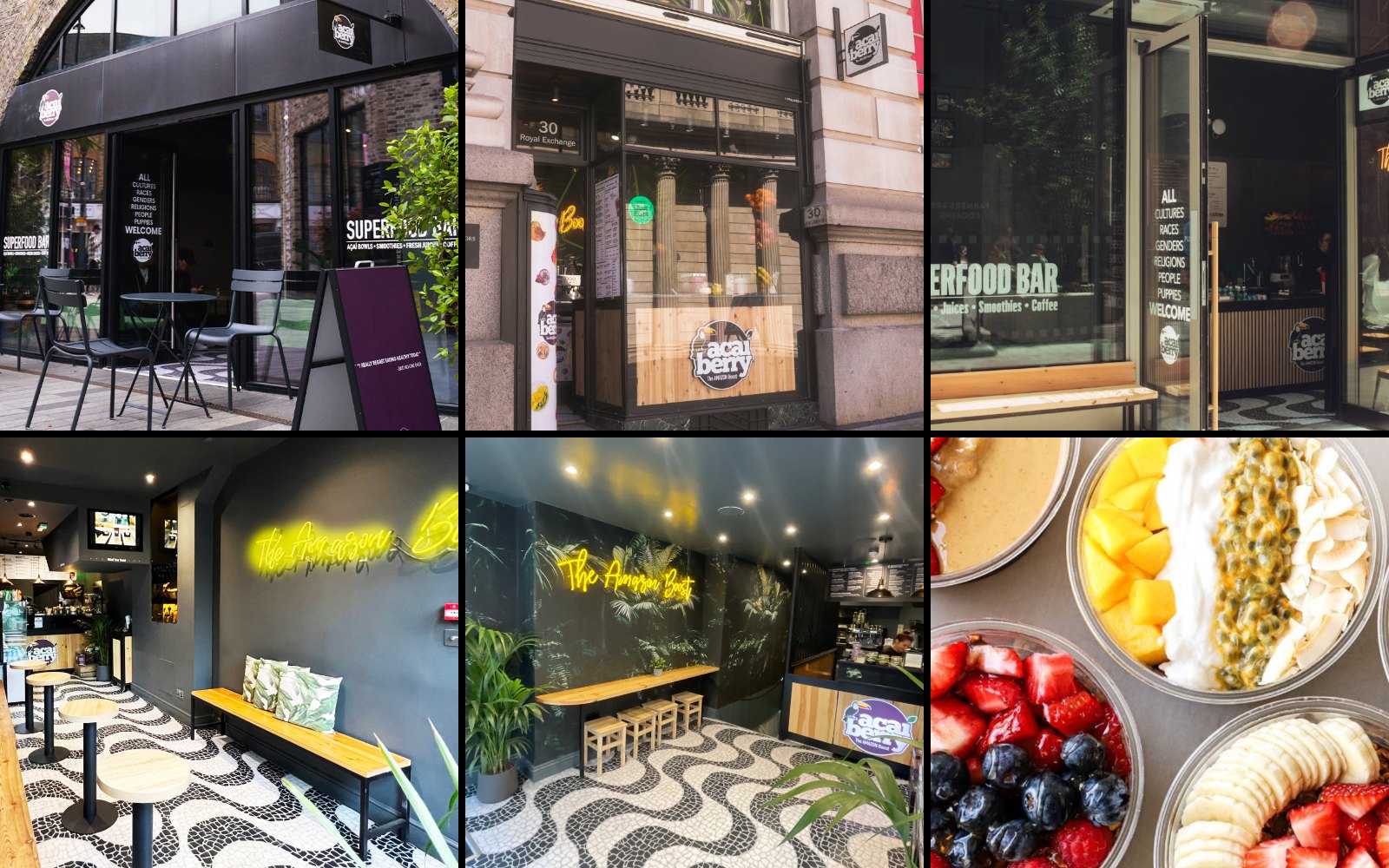
The shop had to look the way the product tastes. That sounds like a slogan and it was actually a brief: clean, bright, fresh, nothing heavy. The brief was a place people would sit, and a place they would photograph, because a bowl of açaí with fruit arranged on it is one of the most photogenic things you can put in front of a customer and it would have been foolish to waste that. Social media did a great deal of our early marketing for free, and the design of the room was part of why.
The product was deliberately simple. Açaí bowls, smoothies and a short list of blended fruit drinks, made from real ingredients, with the contents written down plainly. The shop was open about what went into everything, partly because it is the right thing to do and partly because the customer who reads the ingredients is the customer who comes back. Nutritional claims were kept to what we could stand behind, which is less than the industry usually says.
And then there was the local work, which does not scale and does not photograph well and was, I think, the most important thing the business did. Events in the neighbourhood. Explaining to people, one at a time, what açaí actually is and where it comes from. Working with people online who already loved the product and wanted to talk about it. Small wellness sessions in the shop. None of that shows up on a spreadsheet as revenue, and all of it showed up later as regulars.
What London taught me
Three things, mainly.
The first is that education sells. People who understood what they were eating and why came back more often than people who had simply liked the taste, and they brought friends. Transparency about ingredients was not a cost of doing business, it was the marketing.
The second is that the customer judges the whole visit. Whether the counter was clean, how the staff spoke to them, whether ordering took ten seconds or two minutes, whether the bowl looked like the one in the photograph. Any one of those can lose the second visit, and the second visit is where a café business lives. The first visit is an introduction.
The third is that community is not a marketing line. The events and the conversations were the business, because they turned a place that sold bowls into a place people felt part of, and that is the only durable advantage a small food business has over a larger one.
The London shops are still the foundation of what we do. When the business looked at Dubai, which has its own post, the question was not whether to copy London but which parts of it were the core and which parts were just London. Working that out was its own lesson.