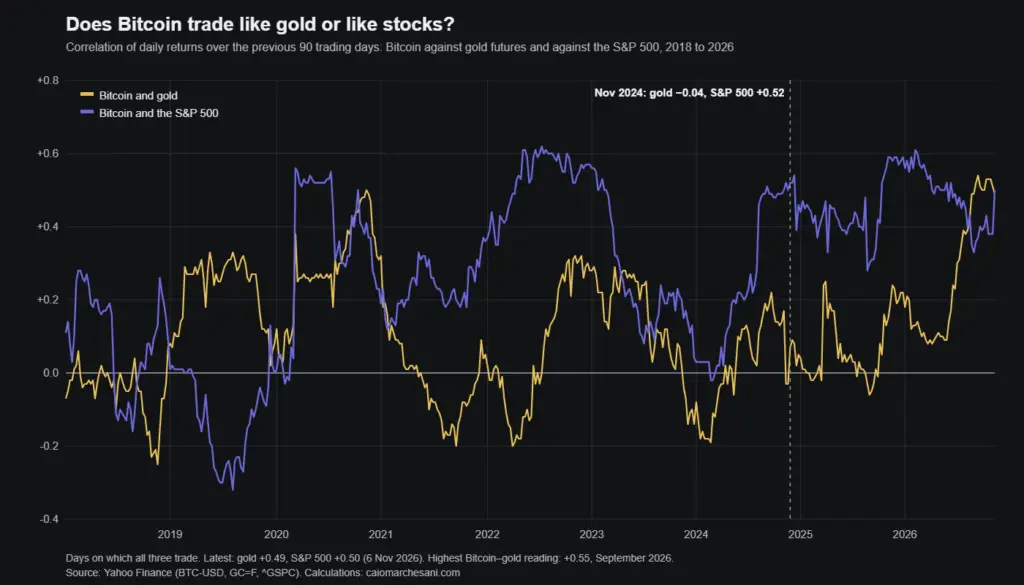
Why the next phase for Bitcoin runs through the Fed, not the White House
Bitcoin’s case for a Fed-driven rally, revisited with two years of data: what the price, real yields and the gold correlation did after November 2024.

From July 2022 the two-year US Treasury yield stayed above the ten-year for 26 months. In the fifty years before, an inversion that lasted more than a few weeks had always been followed by recession within two years. This time none has been declared.
Most of my macro writing tests one indicator at a time and asks what it has really called, and how far ahead. The yield curve is the best known. Consumer confidence is checked against 48 years of data, durable goods orders are read through the core capex line rather than the headline, and non-farm payrolls are judged on what they lead. The series began with ethylene cracker utilisation, a petrochemical number that for several years was the first one I checked.
The rest is about money and prices. Gold against real yields follows a model that tracked gold closely for sixteen years before breaking down in 2022. The pandemic and deflation argues that the channel mattered more than the amount. Three pieces from late 2024 and early 2025 look at the Federal Reserve and Bitcoin: the January FOMC hold, the December meeting and why the Fed matters more than the White House for the price.
A portfolio and a fund get a piece each. The 60/40 test runs a standard risk model on 60% S&P 500 and 40% seven-to-ten-year Treasuries from 2003 onwards, and how a systematic macro fund works follows a simple trend rule on Brent.
Other subjects: Energy and refining · Engineering and physics in markets · Acai from the Amazon to the bowl
Bitcoin’s case for a Fed-driven rally, revisited with two years of data: what the price, real yields and the gold correlation did after November 2024.
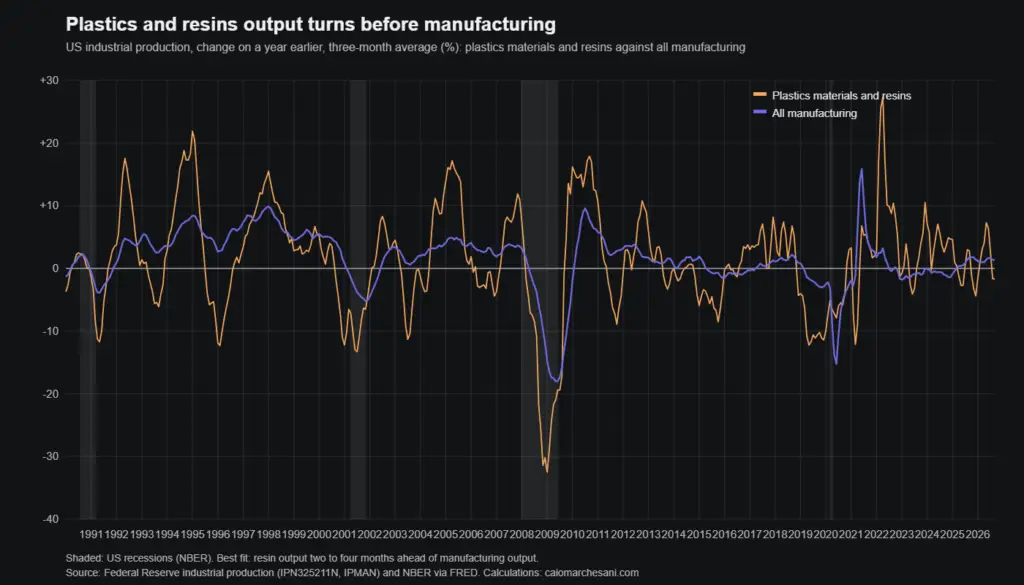
Ethylene cracker run rates as a leading indicator, tested on 50 years of US resin output: what it caught, what it missed, and where it stands now.